[comment]: # (mdslides presentation.md --include media) [comment]: # (The list of themes is at https://revealjs.com/themes/) [comment]: # (The list of code themes is at https://highlightjs.org/) [comment]: # (markdown: { smartypants: true }) <style type="text/css"> .reveal { font-size: 2.2em; } .reveal .code-wrapper code { white-space: pre; font-size: 2em; line-height: 1.2em; } </style> Microservices23 # Microservices - API design By Alon Itach <img src="media/k8s_api_design.png" width="50%">
## API Design Microservices are communicating with each other by "agreeing" on a well-defined API 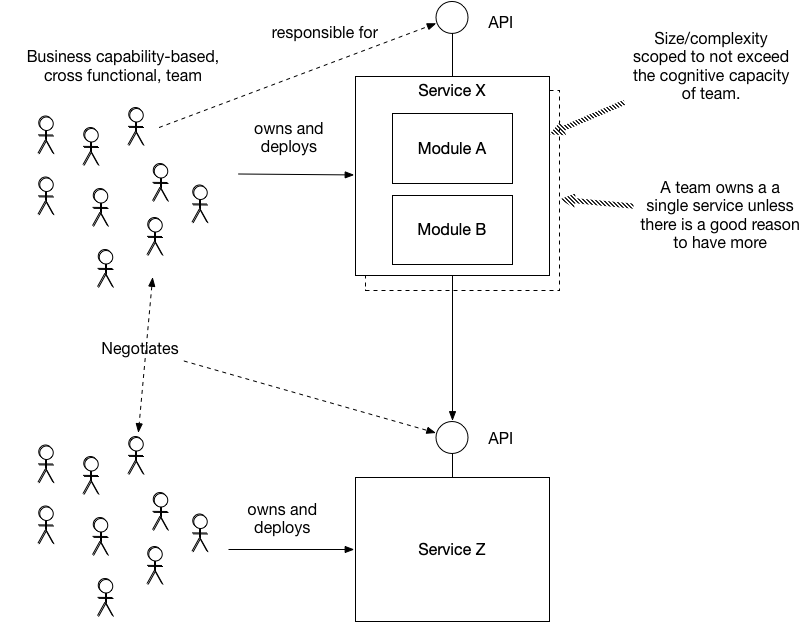 Setting up the **contract** between microservices means making sure that different microservices know how to talk to each other and agree on how they'll work together.
## API Design **API design** determine the interface and communication patterns between microservices.
## API components - Payload Structure Specify the structure and schema of the data exchanged between microservices. This may involve defining data models, data validation rules, and data transformation guidelines.
## API components - Data Formats Agree upon the data formats for communication, such as JSON, XML, or Protocol Buffers. Ensure that all participating services can understand and process the specified data formats.
## API components - Versioning Plan for backward compatibility and versioning of APIs. Establish guidelines on how to introduce changes without breaking existing consumers and how to handle different versions of APIs concurrently.
## API components - Error Handling Define error response formats and error codes that services should use to communicate failures or exceptional conditions. Establish guidelines for handling errors, including retries, circuit breaking, and error propagation strategies.
## API components - Security and Authentication Define the security mechanisms and authentication protocols to be used for securing communication between microservices. This may include protocols like OAuth, JWT, or mutual TLS.
## API components - Rate Limiting and Throttling Specify policies for rate limiting and throttling to control the flow of requests and prevent overload on services. Define the limits and mechanisms to handle exceeded limits.
## RESTful API RESTful API (Representational State Transfer) is a software architectural style that utilizes a set of principles and constraints to facilitate communication and data exchange between systems over HTTP. Examples: Amazon S3, Google data API
## REST API principles Statelessness - Each request from client must contain all the information necessary to understand the request. Client cannot take any advantage of stored context in the server. - Each request is independently of any requests that may have preceded it. - Session state is kept entirely on the client
## REST API principles Statelessness - advantages - Improve observability because monitoring systems don't have to look beyond a single request - Improve scalability because not having to allocate resources for storage - Improve reliability due to easier recovery from server failure <br><br> But... - Overloading network load - Statelessness is sometime difficult to achieve
## REST API principles Cachability - Data within a response to a request must be explicitly on implicitly labeled as cachable or non cachable - If response data is cachable, then the client is able to reuse the data is later, equivalent requests (e.g. pagination).
## REST API principles Uniform interface - Resource is uniquely identified in the URI - Request operation is self descriptive (GET, DELETE, etc..) together with request URI - Name doesn't change (otherwise the API is broken) <br><br> For example: - Retrieve all books: `GET /books` - Retrieve a specific book: `GET /books/{bookId}` - Create a new book: `POST /books`
## REST API principles Resources have representations - Representation captures the current state of the resource (e.g. JSON describing an Account object). - The representation has schema - You need to model your application as a set of resources - Basic CRUD for each resource
## REST API benefits Using rest you'll benefit: - Improve portability - Improve scalability - Allow server's components to evolve independently - Allows apps to be more secure, more reliable, scalable - Separate user concerns from data storage concerns
## API backward compatibility One of the challenges of microservices is how to maintain backward compatibility hen evolving and updating the services. Backward compatibility means that older versions of the services can still work with newer ones, and vice versa, without breaking the functionality or causing errors.
## API backward compatibility - Semantic Version Semantic versioning is a convention for naming and numbering the versions of software components. https://semver.org/
## API backward compatibility - the Open-Closed Principle The Open-Closed Principle is a design principle that states that software entities should be open for extension, but closed for modification. For example: ```text [1|4|7] GET /user/profile/{id} # Open for extension, but URI remain unchanged GET /user/profile/{id}?newParameter=value # distinct URI for new support without modifying the existing one GET /user/profilev2/{id} ```
## API backward compatibility - Implement graceful degradation Providing alternative or fallback options when the normal or expected functionality is not available or not compatible. For example, the advertising service is down? just don't display ads.
## API backward compatibility - Use feature toggles Feature toggles are a mechanism for controlling the visibility and availability of features. ```text [2|5] # Current URI GET /user/dashboard # Expose new feature by send some hidden parameter GET /user/dashboard?feature=experimental ``` By appending `?feature=experimental` to the URI, the experimental feature is toggled on or off at runtime without changing the code or redeploying.
## API backward compatibility - Documenting and testing Use tools like [Swagger](https://swagger.io/) or [API Blueprint](https://apiblueprint.org/) to create and maintain documentation for your microservices API. Use tools like [Apache JMeter](https://jmeter.apache.org/) or [SoapUI](https://www.soapui.org/) to verify and validate the behavior, performance, and compatibility of your microservices.
## Composition Composition patterns are the way microservices are communicate and interact within cluster
## Chained Composition Pattern One microservice makes a request to another service, and that service, in turn, makes additional calls to other services to fulfill the request. 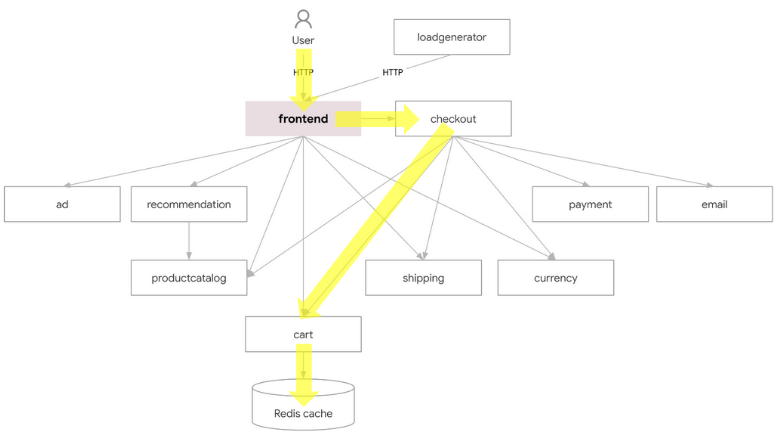
## Aggregate Composition Pattern One microservice collects data from various services and transforms it according to its own requirements. 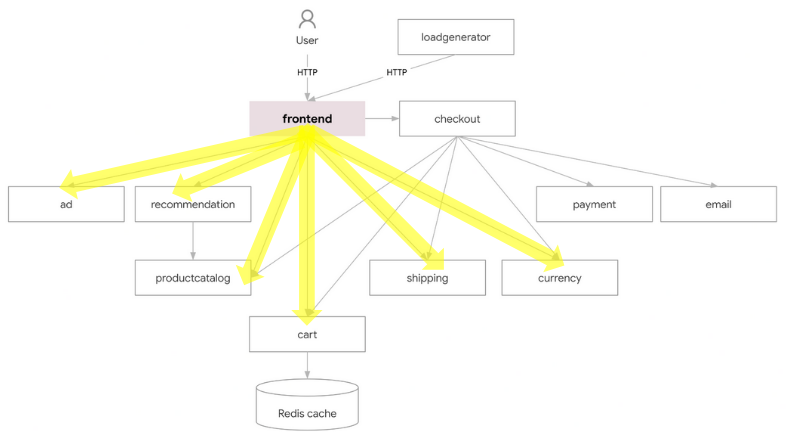
## Proxy Composition Pattern A single service that acts as a proxy for other services (a.k.a. **Facade**). Particularly useful when exposing functionalities to external customers. 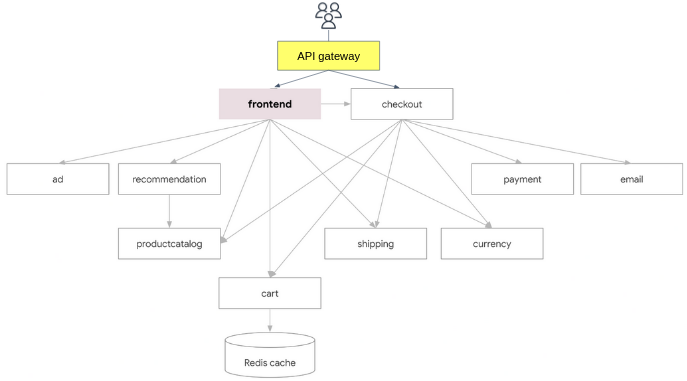 A classic proxy does not contain logic but only wraps a complex interface.
# Thanks References: - https://www.linkedin.com/advice/1/how-can-you-maintain-backward-compatibility-microservices - https://www.swat4net.com/embracing-microservices-composition-patterns/ - https://medium.com/israeli-tech-radar/microservices-facades-and-everything-in-between-c4898d73ddb2 - https://www.linkedin.com/advice/0/how-do-you-simplify-microservice-communication